
Under Swedish law, spouses who divorce are required to carry out a division of property, known as bodelning. This process regulates the financial relationship between the spouses and determines how assets and liabilities are allocated following the dissolution of the marriage.
At its core, a bodelning is a private legal settlement between the spouses. If both parties agree, they have considerable freedom to structure the division as they see fit. In such cases, the spouses may agree on a distribution that deviates from the statutory rules. However, if no agreement can be reached, the provisions of the Swedish Marriage Code (Äktenskapsbalken) apply, and the division must be carried out according to its default principles, most notably the principle of equal division of marital property.
Understanding how bodelning works in practice requires a structured approach. The process typically involves identifying which assets are to be included, determining their value, deducting debts, and finally dividing the net value between the spouses.
All Property Classified as Maritial Property is Included in the Division of Property
The starting point under Swedish law is that all property owned by either spouse is considered marital property (giftorättsgods) unless it has been explicitly classified as separate property. This means that, as a general rule, all assets are included in the division of property regardless of which spouse is the formal owner.
This principle reflects the idea that marriage creates a shared economic partnership. Even if one spouse has acquired or registered assets in their own name, those assets are typically still subject to division.
The scope of marital property is broad and includes bank accounts, savings, shares, investment funds, real estate, tenant-owned apartments, vehicles, boats, business interests and valuable personal property such as art or collectibles.
The type of asset is largely irrelevant. What matters is whether the property is classified as marital or separate. Consequently, even assets that are closely associated with one spouse, such as a car used exclusively by that spouse, may still be included in the division.
There are, however, limited exceptions. Certain personal items, such as clothing and personal-use articles, may be excluded to a reasonable extent.

Example 1: Basic Division of Property
To illustrate how a bodelning works in practice, consider the following example.
Spouse A owns assets worth 600,000 SEK (including savings and a car) and has debts of 100,000 SEK. This results in a net value of 500,000 SEK.
Spouse B owns assets worth 500,000 SEK and has debts of 50,000 SEK. This results in a net value of 450,000 SEK.
The total net marital property is therefore 950,000 SEK. This amount is divided equally, meaning each spouse is entitled to 475,000 SEK.
Since Spouse A has 500,000 SEK, that spouse must transfer 25,000 SEK to Spouse B, who has 450,000 SEK.
This example demonstrates the core principle that the combined net value is divided equally, regardless of initial ownership.
Separate Property is Excluded from Division of Property
Not all property is subject to division. Assets classified as separate property (enskild egendom) are excluded from the bodelning and remain with the spouse who owns them. Separate property may arise through a prenuptial agreement, inheritance with a condition of separate property, gifts with such conditions, or in certain cases through insurance or pension arrangements.
The classification of property is often a central issue in divorce proceedings, particularly when significant assets are involved.
Example 2: Effect of Separate Property
Assume that Spouse A’s savings of 500,000 SEK are classified as separate property.
In that case, only the remaining marital property is included in the division.
Spouse A has marital property of 100,000 SEK and debts of 100,000 SEK, resulting in a net value of 0 SEK.
Spouse B has a net marital property of 450,000 SEK.
The total marital property is therefore 450,000 SEK, and each spouse is entitled to 225,000 SEK.
Spouse B must transfer 225,000 SEK to Spouse A, while Spouse A retains the separate property of 500,000 SEK in full.
This example shows how separate property can significantly affect the outcome.
Debts and Net Calculation
Before any division takes place, each spouse’s debts are deducted from their assets. The division is therefore based on net values rather than gross values. This can lead to outcomes that differ significantly from a simple comparison of asset values. A spouse with high assets but also high debts may end up with a lower net share. Debts connected to specific assets, such as mortgages, must also be taken into account.
Valuation of Assets
Assets are generally valued at their market value at the time of the division of property, not at the time of the divorce. This distinction is important if there is a delay between the divorce and the bodelning, as values may fluctuate significantly over time. In practice, latent tax liabilities are often taken into account, particularly for real estate and investments.
International Aspects – Applicable Law
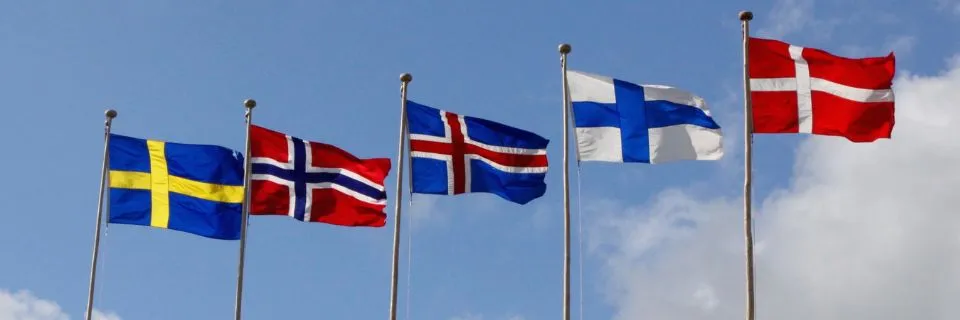
In international marriages, Swedish law does not automatically govern the division of property, even if the divorce itself takes place in Sweden. The applicable law is determined by factors such as habitual residence, place of marriage, and residence over time. It is therefore possible that Swedish law applies to the divorce, while another country’s law applies to the division of property. This can lead to very different outcomes, as legal systems vary in how they treat ownership and division. For this reason, international couples should investigate the applicable law at an early stage.
Timing – Do Not Delay the Division
There is no strict deadline for completing a bodelning under Swedish law. However, delays can create significant practical problems. Over time, it becomes more difficult to identify assets and debts at the relevant date. Documentation may be lost, and asset values may change. It is therefore advisable to complete the division as soon as possible after the divorce.
The Importance of a Written Agreement
A division of property after a divorce in Sweden must be documented in a written agreement signed by both spouses. This agreement serves as legal proof of how the property has been divided and is often required in future legal or financial contexts. An unclear or poorly drafted agreement can lead to disputes and complications.
Legal Assistance – When and Why It Matters
Although it is possible to conduct a bodelning without professional assistance, this may involve risks, particularly in more complex situations. A family lawyer can assist with identifying assets, ensuring correct valuation, calculating net shares, and drafting a legally sound agreement. This is especially important where significant assets, international elements, or disputes are involved.
Conclusion
The division of property under Swedish law follows a clear legal structure, but its practical application can be complex. While equal division is the starting point, the outcome depends on factors such as classification of property, debts, valuation, and, in international cases, applicable law. A careful and well-structured approach is therefore essential to ensure a fair and legally sound outcome.